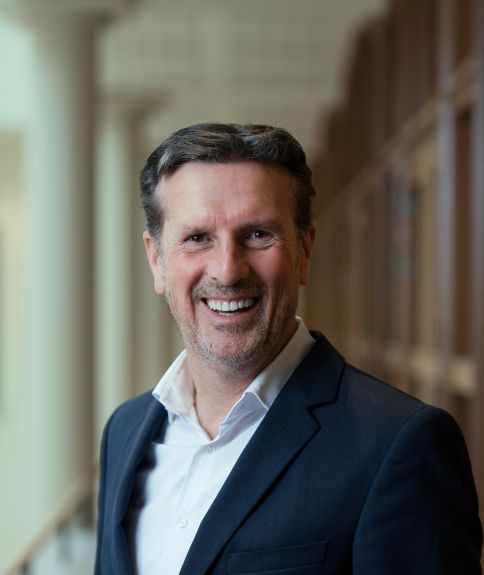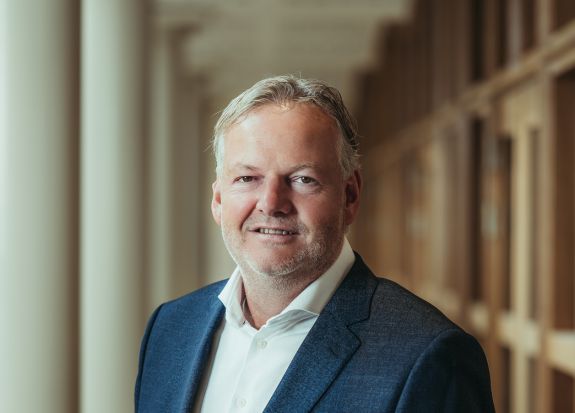
Meet Leendert: Living and breathing commodity trading
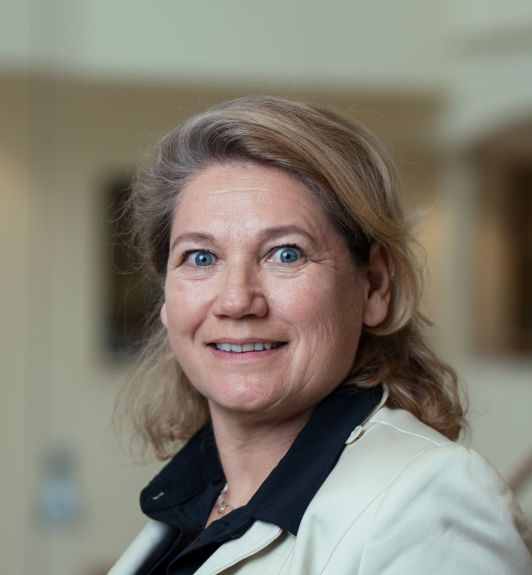
Esther Burger
January 16, 2026
Over the coming weeks, we’re sharing stories from leaders across the Novature companies.
Who are they? What drives them? And how does their leadership shape the culture we’re building at Novature?
“Make things as simple as possible, but not simpler.”
That quote by Albert Einstein perfectly captures what Leendert Vis focuses on every day at DycoTrade: making complex matters understandable, without oversimplifying reality. “In our world, almost nothing is straightforward,” Leendert says. “Commodity trading, ERP, international processes. The temptation to simplify is always there. But if you go too far, that’s when things break down.”
Throughout his career, Leendert has worked at the intersection of business and technology. Always close to the customer, always asking the same question: where is the real value? Today, he applies that mindset in the world of commodity trading, a niche where processes, timing, and trust are everything.
The engine of the business
Commodity trading is a world of tight margins, global flows, and constant pressure on timing. It revolves around money, inventory, orders, and international trade flows. “ERP isn’t just a system,” Leendert explains. “It’s the engine of the business. If it doesn’t run properly, everything comes to a halt.” At the same time, the Microsoft ecosystem is evolving rapidly. ERP systems are becoming smarter, analytics more powerful, and AI increasingly accessible. “With Power BI and AI, you’ll soon be able to ask data questions in plain language. We’re only at the start, but this will reshape ERP.”
Another challenge lies at the front end: how information enters the system. Interfaces, APIs, automation — it remains complex. “AI is already helping there,” Leendert says. “Think of an email or PDF from a customer that automatically generates a proposal in the ERP system. For now, humans review it. Step by step, it becomes more autonomous.”
Managing expectations, delivering value
Customer expectations are clear: deep business and technology knowledge. “They expect you to understand their processes, know their market, and know how to implement solutions properly.” That goes beyond technical skills. It takes courage to ask the right questions, propose alternatives, and challenge customers when it matters most. “Customers often say they want to be challenged and hear an honest perspective. When that happens, there’s a brief moment of surprise. Then the conversation deepens, new insights emerge, and the most meaningful ideas are born.”
Leendert sees a clear leadership role here. “People tend to fall back on technology and products. But it should always be about customer value. Why are we here? What helps the customer move forward? Only then can you truly help customers take meaningful steps in a world that’s becoming faster, more volatile, and more unpredictable every day.”
Leadership as translation
Leendert comes from the customer side himself, and that makes a difference. “I constantly translate: where is the customer’s value, and how do we deliver it?” He asks that question not only externally, but internally as well. For Leendert, this translation work is not a role, but a habit. “Business to IT, and IT back to business — that’s often the biggest challenge. That’s where our added value lies.” At the same time, leadership is never a solo effort. “Ultimately, it’s the people and the team who create customer value. At DycoTrade, we’re lucky to have a fantastic team of professionals who make this happen across management, customer interactions, and development.” His personal ambition is clear: “My goal is to build teams that can do this independently. At management level, with customers, and in development.”
Knowledge and leadership go hand in hand
In this niche, content knowledge is not optional. “Customers go straight into depth. You need to know what you’re talking about.” As the organisation grows, leadership roles evolve. “The further you progress, the more it becomes about people. But without a strong connection to the content, you won’t succeed here.” For Leendert, leadership is about combining two worlds: “Content and people. Technology and business.”
Looking ahead in a changing world
The world of international trade is constantly shifting. Geopolitics, changing trade flows, volatility. “Uncertainty has become the new normal. But trade will always continue. Commodities will find their way.” For leaders, that means balancing short-term results with long-term vision. “You can’t focus only on the future,” Leendert says. “The business still has to run today.” Technology is evolving fast, but the human role is becoming more important, not less. “People need to provide direction, make decisions, and keep the bigger picture in view.”
This is where Einstein’s quote comes full circle. Simplification helps you move forward, but oversimplification holds you back. Strong leadership lives in between: understanding complexity, distilling it to its essence, and communicating clearly. “Only then,” Leendert concludes, “can you truly help customers take meaningful steps in a world that’s becoming faster and more unpredictable every day.”

%20(1).jpg?width=575&height=357&crop=2%2C62%2C1166%2C717&format=jpeg&dpr=1.0&signature=d9889f2a9c2c3a4f1435ecd40eb143ae5f13b4c8)