.jpg?width=575&crop=0%2C0%2C3000%2C4000&mode=crop&format=jpeg&dpr=1.0&signature=142a9371a09bcceca30b9ed35800f882ed664b8b)
How AI Is Reshaping Professional Services and ERP Migrations
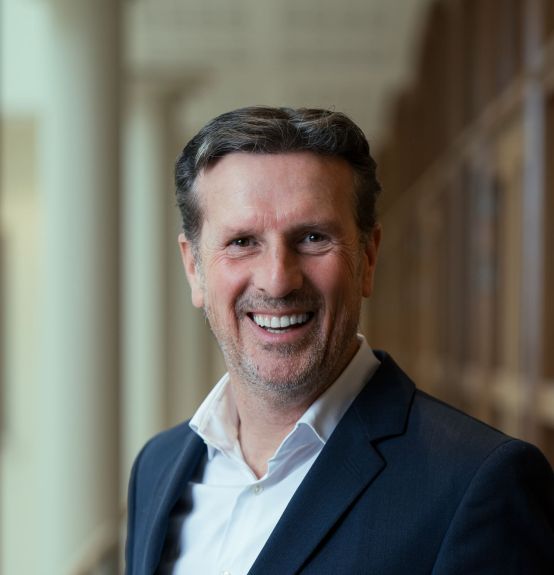
Louis Rustenhoven
July 28, 2026
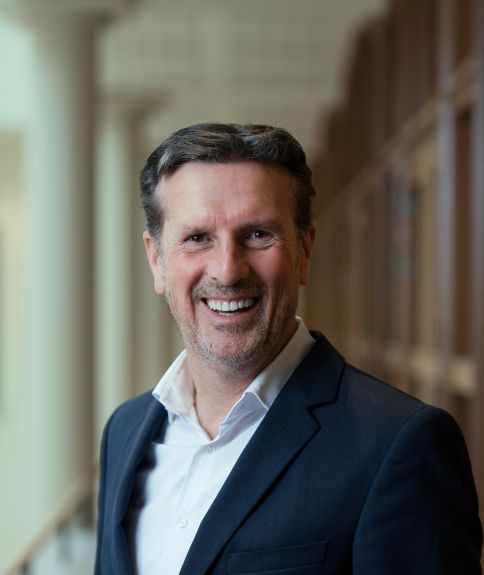
Daryn and Linas on how AI is reshaping professional services and ERP migrations
For the past thirty years, technology has helped professionals work faster and more efficiently. Spreadsheets simplified calculations, ERP systems connected processes, and automation improved workflows. But professionals still did the work themselves. AI changes something much bigger: not just how work gets done, but increasingly who does it.
Daryn Terlesky, Chief Technology and Innovation Officer at Ciellos, and Linas Sneideris, Vice President of Technical Services at Companial, see this transformation firsthand. In their roles, they help organizations and Microsoft partners adopt AI and translate new technology into practical business value. Drawing on their experience, they share how AI is reshaping professional services, what it means for migrations, and how organizations can prepare for the future.
The Rise of the Frontier Professional
As AI becomes more capable, the role of the professional is changing. "Technology used to sit beneath you. AI sits beside you," says Daryn. The real value therefore shifts from execution to judgment. Success depends on asking the right questions, evaluating AI's output and knowing when human expertise is still required. This shift is creating a new type of professional: the Frontier Professional. Someone who combines deep domain expertise with the ability to work effectively alongside AI. "A Frontier Professional doesn't blindly trust AI, but doesn't see it as a threat either," says Linas. "They use AI to solve complex problems faster, better and at greater scale."
AI increasingly handles repetitive execution, while professionals focus on complex decision-making, client relationships, ethical considerations and accountability. Those human qualities become even more valuable as AI capabilities continue to grow.
The impact extends beyond individual professionals. AI is also changing how expertise is shared within organizations. Tasks that previously required years of experience can increasingly be completed by less experienced consultants, provided they work with the right AI tools and clear quality standards. That does not make senior professionals less important. On the contrary, their role shifts towards designing frameworks, validating outcomes and handling the complex exceptions where experience truly matters. Rather than concentrating expertise in a small group of specialists, AI enables organizations to scale knowledge across larger teams while maintaining consistency and quality.
From Selling Hours to Delivering Outcomes
AI is also reshaping the business model of professional services. Traditionally, consulting firms sold expertise by the hour. As AI completes work faster, that model becomes less relevant. Clients increasingly value predictable outcomes, quality and speed over the number of hours invested. Organizations that use AI purely to reduce costs risk missing the biggest opportunity. The real competitive advantage comes from using AI to deliver better results and create more value for customers.
AI Makes Migrations More Predictable
One area where this transformation is already visible is system migrations. Traditionally, migration projects were complex and difficult to estimate. Legacy customizations, undocumented code and changing business processes often created unexpected challenges. "The problem was always that you never fully knew what you'd run into," says Daryn. AI changes that dynamic. It can analyze large volumes of code and data, identify patterns, detect conflicts, generate code and automate testing at a scale that would be impossible manually. Instead of relying largely on specialist experience, organizations gain a much clearer understanding of scope, risks and costs before a project even starts.
This makes migrations more predictable, reduces business disruption and enables organizations to make better-informed investment decisions.
According to Daryn and Linas, this fundamentally changes the nature of migration projects. Instead of relying on assumptions, partial analyzes and specialist intuition, organizations can base decisions on a comprehensive assessment of their existing environment. That early clarity reduces uncertainty throughout the project. Teams spend less time reacting to unexpected issues and more time helping customers prepare for the business changes that accompany a successful migration. As technical execution becomes increasingly automated, the consultant's role shifts from solving technical problems to guiding organizations through transformation.
Where AI Delivers the Greatest Value
AI creates the biggest impact in work that involves repetition, patterns and large volumes of information. It accelerates migration assessments, code conversion, data mapping, testing and documentation, while improving consistency and reducing errors. Human expertise remains essential where judgment is required. AI cannot decide which business processes should change, build support among stakeholders or guide organizational change. By taking over repetitive work, AI gives professionals more time to focus on these high-value activities.
Expertise Becomes More Valuable
Many people see speed as AI's biggest advantage, but Daryn and Linas believe predictability and quality may ultimately matter even more. AI consistently analyzes complete datasets, follows every step and reduces the chance of human error. "For an executive, predictability may well be the greatest value," says Linas. "Knowing when something will be finished, what it will cost and what the risks are." Rather than replacing expertise, AI amplifies it. Critical thinking, sound judgment, communication and the ability to lead change become the defining skills of tomorrow's professional.
Technology alone does not determine whether AI delivers value. According to Daryn and Linas, the organizations that move fastest treat AI as a business transformation rather than simply another tool. Instead of adding AI to existing processes, they rethink how work should be done now that AI is available. That requires leadership commitment, investment in people and a culture where experimentation is encouraged. Equally important is governance. Organizations need clear agreements about where AI can operate autonomously, where human review remains essential and who remains accountable for the final outcome. These guardrails do not slow innovation. Instead, they create the confidence needed to scale AI responsibly across the business. Companies that start learning today, even through small, practical use cases, will build capabilities that are difficult for competitors to catch up with later.
Looking Ahead
As AI continues to evolve, migrations themselves will become less of a destination and more of a starting point. The technical work will increasingly be automated, allowing professionals to focus on helping customers unlock the full potential of modern cloud platforms, AI agents and new business capabilities. The biggest opportunity is therefore not simply migrating to a new system, but rethinking how organizations work once they get there.The message from Daryn and Linas is clear: AI is pushing the boundaries of what is possible. Organizations that invest today in people, knowledge and new ways of working will be best positioned to lead tomorrow. The Frontier Professional is not a role you hire for; it is a capability you develop.

%20(1).jpg?width=575&height=357&crop=2%2C62%2C1166%2C717&format=jpeg&dpr=1.0&signature=d9889f2a9c2c3a4f1435ecd40eb143ae5f13b4c8)